
CBG vs Delta-8: Which Is Right for You?
CBG and delta-8 both emerged from the hemp boom that followed the 2018 Farm Bill. That is roughly where the similarities end. One is a naturally occurring, non-psychoactive cannabinoid with a clear legal future. The other is a synthesized THC isomer with a mild high and a legal clock ticking down to November 2026. Here is the full comparison — effects, legality, drug tests, safety, and what happens next.
Last updated: April 2026
The direct answer
CBG is non-psychoactive and structurally future-proof. Delta-8 is mildly psychoactive and faces an uncertain legal future. If you want the ritual of smoking hemp without impairment, without drug test risk from the cannabinoid itself, and without worrying about which states will ban your product next — CBG is the cleaner choice. If you specifically want a mild high and are willing to accept the legal and testing trade-offs, delta-8 exists to serve that purpose — for now.
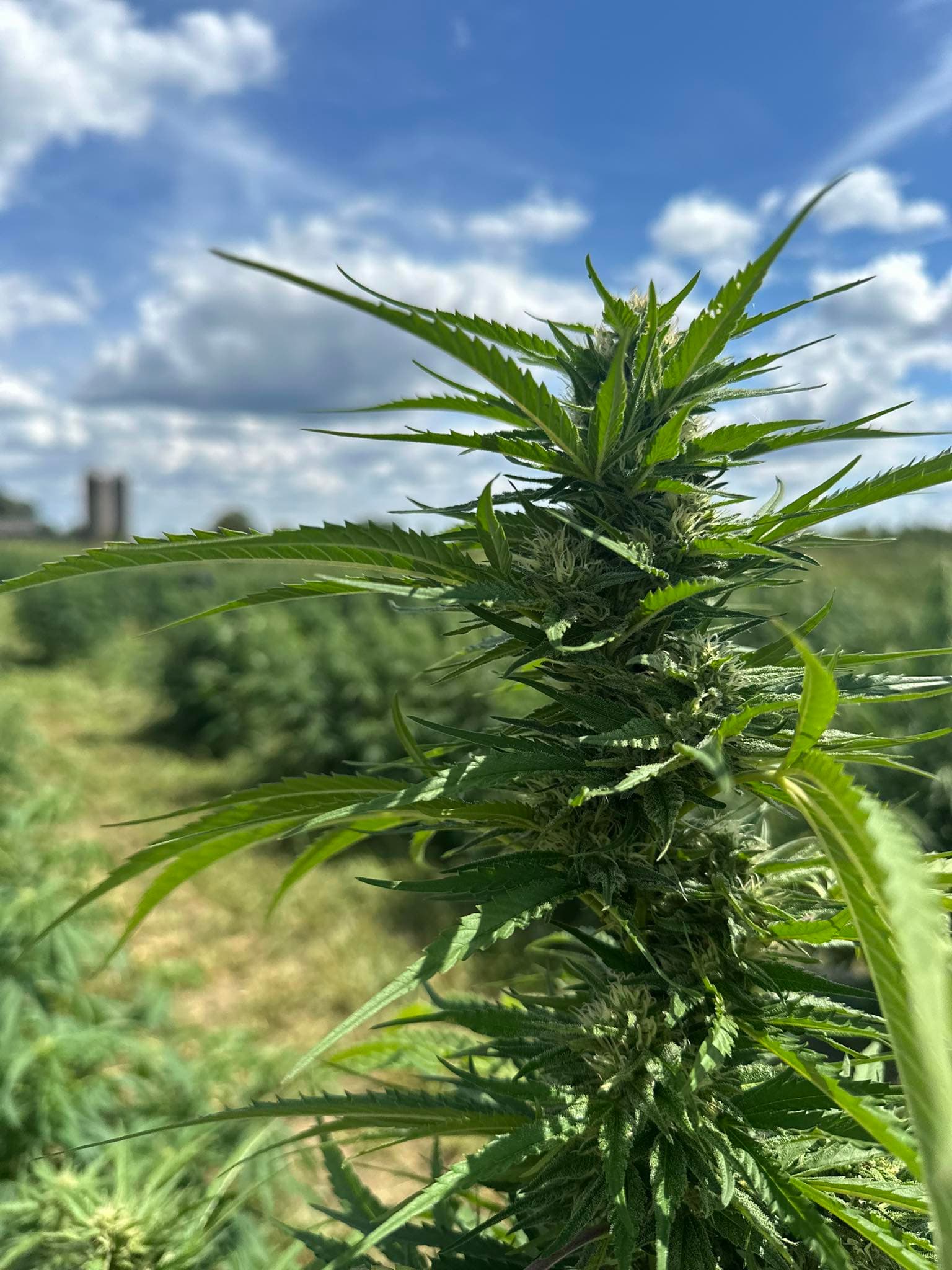
CBG (cannabigerol) is a naturally occurring cannabinoid found in hemp. It is the biosynthetic precursor to THC, CBD, and CBC — the plant produces CBG first and converts it into other cannabinoids as it matures. CBG-rich flower is harvested from varieties bred to retain high CBG content (11-14%) while keeping THC levels negligible. No chemical conversion is involved.
Delta-8-THC (delta-8-tetrahydrocannabinol) is a THC isomer. It exists naturally in cannabis in trace amounts — typically less than 0.1%. The delta-8 products on the market are not extracted from the plant at these trace concentrations. Instead, CBD isolate derived from hemp is chemically converted into delta-8-THC through a process called isomerization — an acid-catalyzed reaction that rearranges the molecular structure. This is synthesis, not extraction.
Full comparison table
| Property | CBG | Delta-8-THC |
|---|---|---|
| Psychoactive? | No | Yes (mild — roughly 50-70% the intensity of delta-9 THC) |
| Federal legal status | Legal (2018 Farm Bill, <0.3% delta-9 THC) | Gray area — contested under the 2018 Farm Bill; DEA has signaled synthesized THC isomers may not qualify |
| P.L. 119-37 impact (Nov 2026) | Survives — naturally ultra-low total THC | Eliminated — delta-8 counts toward the 0.4mg total THC cap; typical products contain 10-50mg |
| Source | Natural — bred hemp varieties harvested with high CBG content | Synthesized — CBD isolate converted via acid-catalyzed isomerization |
| Drug test risk | Very low — CBG is not tested for; trace THC in hemp is the only variable | High — delta-8 metabolizes into THC-COOH, the exact metabolite drug tests target |
| Reported effects | Subtle calm, focused ease, no impairment | Mild euphoria, relaxation, some cognitive impairment |
| Safety profile | Well-characterized — whole-plant flower, third-party COA tested | Unregulated synthesis — residual solvents, heavy metals, and unknown byproducts are common in untested products |
| State bans | Legal in the vast majority of states | Banned or restricted in 20+ states (as of 2026) |
| Availability | Online, shipped nationwide, farm-direct | Online and smoke shops — availability shrinking as bans spread |
Legality: the deep dive
The legal landscape for these two cannabinoids could not be more different — and the gap is widening.
CBG: clear legal standing
CBG derived from hemp is federally legal under the 2018 Farm Bill (Agriculture Improvement Act). Hemp is defined as Cannabis sativa with no more than 0.3% delta-9 THC by dry weight. CBG flower is naturally ultra-low in THC and sits comfortably within this definition. No state has banned CBG specifically. It can be legally purchased, possessed, and shipped in the vast majority of states.
Looking forward, P.L. 119-37 (effective November 2026) establishes a 0.4mg total THC cap per product. "Total THC" includes all THC isomers — delta-9, delta-8, THCA (decarboxylated equivalent), and others. CBG flower, with naturally negligible total THC content, clears this new threshold easily. CBG is structurally future-proof under both current and incoming federal law.
Delta-8: a gray area getting darker
Delta-8's legal basis has always been contested. The argument goes like this: the 2018 Farm Bill legalized "all derivatives, extracts, and cannabinoids" from hemp, as long as the final product contains less than 0.3% delta-9 THC. Delta-8 manufacturers claim their products qualify because the source material is hemp-derived CBD and the finished product is below the delta-9 threshold.
The counter-argument: the DEA's Interim Final Rule (2020) stated that "synthetically derived tetrahydrocannabinols remain Schedule I." Converting CBD into delta-8 via isomerization is, by most chemical definitions, synthesis — not extraction. The legal question is whether the Farm Bill's exemption for hemp derivatives overrides the Controlled Substances Act's prohibition on synthetic THC. Courts have split on this.
In practice, more than 20 states have not waited for federal clarity. They have banned delta-8 outright or restricted it to licensed dispensaries. States including New York, Colorado, Vermont, Oregon, Alaska, Montana, Iowa, and others have enacted explicit delta-8 prohibitions. The trend is clearly toward more restrictions, not fewer.
P.L. 119-37 resolves the ambiguity at the federal level. When it takes effect in November 2026, the 0.4mg total THC cap applies to all THC isomers. A single delta-8 gummy containing 25mg of delta-8-THC exceeds the cap by more than 60 times. Delta-8 flower, vapes, tinctures, and edibles will all become federally non-compliant. There is no reformulation path — the product category itself is incompatible with the new law.
For a detailed breakdown of state-by-state hemp legality, see our CBG legal guide.
Why people choose delta-8
Delta-8 became popular for understandable reasons. Honesty about that is important — dismissing it does not serve anyone looking for a real comparison.
- Mild psychoactive experience. Delta-8 produces a gentle high — roughly 50-70% the intensity of delta-9 THC. For people who find regular cannabis too strong or anxiety-inducing, delta-8 offered a middle ground: noticeable psychoactive effects without overwhelming intensity.
- Cannabis-adjacent in non-legal states. In states without recreational cannabis laws, delta-8 became the closest legal (or gray-area legal) option for people who wanted a THC-like experience. Smoke shops and online retailers filled the gap.
- Accessibility and price. Delta-8 products were cheap and widely available — no dispensary license, no ID verification in many cases, no medical card. The barrier to entry was effectively zero.
- Perceived legal cover. The "hemp-derived" label gave consumers and retailers a sense of legal protection, even when that protection was always tenuous. Many buyers did not realize the legal foundation was contested.
These are legitimate reasons. But the trade-offs — drug test positives, unregulated synthesis, state bans, and the 2026 deadline — are catching up.
Why people choose CBG
CBG serves a different need entirely. The appeal is not about getting a lighter high — it is about having a ritual without consequences.
- Zero impairment. CBG does not produce a high. You remain fully present, fully functional. You can smoke CBG flower and then drive, work, parent, or have a conversation without any cognitive shift. This is not a "lighter version" of being high — it is a fundamentally different experience.
- Clear legal status. No gray areas. No contested interpretations. No state-by-state gambling. CBG hemp is federally legal under the 2018 Farm Bill and compliant with P.L. 119-37. You can buy it online and have it shipped to your door without checking a legality map first.
- Ritual without drug test risk. CBG itself does not trigger drug tests — standard panels screen for THC-COOH, not CBG metabolites. The only drug test variable with CBG flower is the trace THC naturally present in hemp (up to 0.3% delta-9 by dry weight), which is a far lower risk than delta-8's guaranteed positive. For more detail, see our CBG and drug testing guide.
- Natural product, not synthesized. CBG flower is a whole-plant product — bred, grown, harvested, cured. Our strains (Stem Cell at 11-14% CBG for daily focus, The White for deeper evening relaxation) come from Lifestyle Family Farms in Grass Lake, Michigan. Every batch ships with a third-party Certificate of Analysis. There is no chemical conversion, no solvent residue, no byproduct risk.
- Sober-curious alignment. For people cutting back on alcohol, nicotine, or THC, CBG provides the hand-to-mouth ritual, the inhale-exhale, the moment of pause — without the substance. It is a smoke break, not a substance break.
The 2026 question: what happens to delta-8?
P.L. 119-37 takes effect in November 2026. This is not a proposed bill — it is signed law. Here is what it means for delta-8 and CBG.
The law establishes a 0.4mg total THC cap per product. "Total THC" is defined to include delta-9-THC, delta-8-THC, THCA (at its decarboxylated equivalent), and all other THC isomers. This is not a percentage threshold like the Farm Bill — it is an absolute milligram cap on total THC content in the finished product.
The math for delta-8 is straightforward and devastating:
- A typical delta-8 gummy contains 10-50mg of delta-8-THC. The cap is 0.4mg. That is 25x to 125x over the limit.
- A delta-8 vape cartridge can contain 800-1000mg of delta-8-THC. That is 2,000x to 2,500x over the limit.
- Delta-8 flower (hemp sprayed with delta-8 distillate) typically tests at 10-20% delta-8-THC. A single gram contains 100-200mg of delta-8. That is 250x to 500x over the limit.
There is no reformulation path. You cannot make a delta-8 product with 0.4mg or less of delta-8-THC that produces a perceptible psychoactive effect. The product category is structurally incompatible with the new law.
The math for CBG is equally straightforward — in the other direction. CBG flower from compliant hemp typically contains less than 0.3% total THC by dry weight. Even a full ounce of CBG flower (28g) at 0.3% total THC contains roughly 84mg of total THC across the entire package — and the cap applies per individual product unit, not per serving. Individual pre-rolls and reasonable retail units sit well within the threshold. CBG does not need to reformulate. It is already compliant.
For a deeper look at P.L. 119-37 and what it means for hemp products, see our CBG legal guide.
Drug testing: the decisive difference
If you are subject to drug testing — for work, probation, custody, military service, or any other reason — this section matters more than anything else on this page.
Delta-8 will cause you to fail a drug test. This is not a "might" or a "could." Delta-8-THC is metabolized by the liver into 11-hydroxy-THC and then into THC-COOH — the exact same metabolite that delta-9 produces, and the exact metabolite that every standard immunoassay drug panel screens for. There is no commercially available drug test that can distinguish between delta-8 and delta-9 metabolites. If you consume delta-8 and are tested, you will test positive for THC.
CBG itself does not trigger drug tests. No standard SAMHSA panel screens for CBG or its metabolites. The only variable is that CBG flower is hemp, and hemp legally contains up to 0.3% delta-9 THC by dry weight. This is a trace amount. Most occasional CBG users will not accumulate enough THC metabolites to approach the standard 50 ng/mL immunoassay cutoff. But the risk is not zero for heavy daily users — we cover this honestly and in full detail in our CBG and drug testing guide.
The bottom line: with delta-8, a positive drug test is a certainty. With CBG, it is a low-probability edge case tied to trace THC, not the cannabinoid itself.
Safety: what is in the product?
CBG flower is a whole-plant product. It is grown, harvested, dried, and cured — the same process as any agricultural flower. Quality control means third-party lab testing for cannabinoid content, pesticides, heavy metals, microbials, and residual solvents. Our flower from Lifestyle Family Farms ships with a Certificate of Analysis for every batch.
Delta-8 products are manufactured through chemical synthesis. The isomerization of CBD into delta-8-THC uses acids (often hydrochloric acid, sulfuric acid, or Lewis acids like boron trifluoride), solvents, and catalysts. This process can produce unintended byproducts — including unknown THC isomers, residual acids, and heavy metals from contaminated reagents.
The FDA has issued consumer warnings specifically about delta-8 products, citing adverse event reports, inconsistent labeling, and contamination concerns. Because delta-8 exists in a regulatory gray area, there is no mandatory testing standard, no manufacturing oversight, and no consistent quality control across the industry. Some brands test rigorously. Many do not. The consumer has no reliable way to know which is which.
This is not an abstract concern. In 2023, the FDA reported receiving over 100 adverse event reports for delta-8 products, including cases requiring hospitalization. The agency highlighted that many products contained contaminants not disclosed on the label.
CBG and THC: a broader comparison
If you are also weighing CBG against delta-9 THC (the primary psychoactive compound in cannabis), we have a dedicated comparison that covers receptor science, legal status, and use cases in depth.
Frequently asked questions
Is CBG the same as delta-8?
No. CBG is a non-psychoactive cannabinoid naturally present in hemp. Delta-8 is a mildly psychoactive THC isomer typically synthesized from CBD. They have different effects, different legal profiles, and very different futures under P.L. 119-37.
Will delta-8 make me fail a drug test?
Yes. Delta-8 metabolizes into THC-COOH, which is what drug tests screen for. There is no way to use delta-8 and pass a standard drug panel. CBG itself is not screened for — see our drug test guide for the full risk picture.
Is delta-8 legal in all 50 states?
No. More than 20 states have banned or restricted delta-8 as of 2026. P.L. 119-37 (effective November 2026) will make most delta-8 products federally non-compliant. See our legal guide for state-by-state details.
What happens to delta-8 after November 2026?
P.L. 119-37 imposes a 0.4mg total THC cap per product. Delta-8 counts toward total THC. A single gummy at 25mg delta-8 is 62x over the cap. The product category is structurally incompatible with the new law. CBG flower clears the threshold easily.
Can I use CBG instead of delta-8?
If you want a ritual, calm, and relaxation without impairment — yes. If you specifically want a mild high, CBG will not provide that. Many former delta-8 users switch to CBG for the legal certainty and the drug test safety. Browse our CBG flower.
The ritual, without the risk
Non-psychoactive CBG flower. Federally legal now and after November 2026. Farm-direct from Lifestyle Family Farms, Grass Lake, Michigan. Every batch third-party lab tested.