Sober Curious? Here's What to Try Instead of Alcohol
You do not have to be an alcoholic to wonder whether alcohol is doing more harm than good. The sober curious movement has opened up a space for that question — and a growing market of alternatives has rushed to answer it. Here is what is actually available, what each option feels like, and where CBG flower fits in.
Last updated: April 2026
What the sober curious movement actually is
The term "sober curious" was coined by Ruby Warrington in her 2018 book of the same name. The core idea is simple: question your relationship with alcohol without necessarily committing to full sobriety. It is not an abstinence program. It is not AA. It is permission to ask whether the drink in your hand is something you actually want — or just something you default to because the situation expects it.
Since 2018 the movement has gone mainstream. The non-alcoholic beverage market hit $13 billion globally in 2024, according to IWSR Drinks Market Analysis. Dry January participation has grown year-over-year. And the average age of people questioning their alcohol intake has dropped — it is no longer just a midlife reckoning. Gen Z drinks measurably less than any prior generation, and a 2023 Gallup survey found that 62% of adults under 35 say they are actively trying to drink less.
The sober curious movement is not anti-alcohol. It is pro-choice. And the most important practical question it raises is: if you take alcohol out of a social situation, what do you replace it with? The ritual, the taste, the hand occupation, the signal that you are unwinding — these are not trivial. The gap alcohol leaves behind is real, and most people who go sober curious discover it within the first week.
The landscape of alternatives
There are now more alcohol alternatives than at any point in history. They fall into a few distinct categories, each with a different mechanism and a different gap they fill. Here is the honest breakdown.
Non-alcoholic beer, wine, and spirits
Non-alcoholic beer and wine have existed for decades, but the quality has improved dramatically since 2019. Brands like Athletic Brewing, Gruvi, and Lyre's have made NA drinks that taste genuinely good — not like watered-down regret.
The upside: Familiar format. You can hold a beer at a barbecue and nobody asks questions. The flavor experience is close enough to the real thing that it scratches the taste itch. Widely available — most grocery stores now carry multiple NA options.
The downside: No physiological effect. You get the taste ritual, not the body sensation. For some people that is enough. For others — particularly those who relied on alcohol for genuine physical relaxation or social lubrication — an NA beer can feel like a costume without a body underneath it. It looks like the thing, but it does not feel like the thing.
There is also a psychological trigger risk. For people with alcohol use disorder, the taste and context of an NA beer can activate craving pathways. This is individually variable and worth being honest about.
Kava
Kava is a plant from the South Pacific (Piper methysticum) whose root contains kavalactones — compounds that produce a genuine relaxing body effect. It has been used ceremonially in Fiji, Tonga, and Samoa for centuries. In the U.S., kava bars have been opening in cities since the mid-2010s, and bottled kava drinks are now available at many health food stores.
The upside: Kava actually does something. The body sensation is real — a muscle relaxation, a loosening of tension, sometimes a mild euphoria. Reverse tolerance means it may work better over time, not worse. It is social — kava bars exist specifically as alcohol-free gathering spaces.
The downside: The taste is genuinely difficult. Traditional kava tastes like earthy pepper water and numbs your mouth. Some people never get used to it. Quality varies enormously — noble kava strains are considered safe, but "tudei" varieties can cause nausea and headaches. There have been historical concerns about liver toxicity with heavy use, though the research on noble kava largely exonerates it. Kava is not regulated by the FDA, so quality control depends on the vendor.
Adaptogens and functional beverages
Adaptogenic drinks use herbs like ashwagandha, rhodiola, L-theanine, reishi, and lion's mane to promise stress reduction, focus, or calm. Brands like Kin Euphorics, Curious Elixirs, and Recess have built entire businesses around this category.
The upside: Beautiful packaging. The experience of opening a can and drinking something intentional has real ritual value. Some adaptogens have legitimate research behind them — ashwagandha has multiple randomized controlled trials showing cortisol reduction, and L-theanine (from tea) has solid evidence for promoting calm alertness.
The downside: The effects are subtle at best and undetectable at worst. Most functional beverages contain adaptogen doses well below the quantities used in clinical studies. A typical can might contain 150mg of ashwagandha when the studied dose is 300-600mg. You are often paying $5-7 per can for a sub-therapeutic dose in sparkling water. And the regulatory landscape is loose — claims like "stress relief" and "euphoria" sit in a gray area that the FDA has not meaningfully policed.
Functional mushrooms
Functional mushroom products — lion's mane, reishi, chaga, cordyceps — have surged in popularity since 2020. They are available as tinctures, powders, capsules, coffee blends, and ready-to-drink beverages. These are not psilocybin mushrooms — they are non-psychoactive species used in traditional medicine.
The upside: Lion's mane has preliminary evidence for supporting nerve growth factor production. Reishi has been studied for immune support and sleep quality. The category has deep roots in Traditional Chinese Medicine and offers a genuine alternative wellness framework.
The downside: Most human clinical evidence is preliminary — small sample sizes, short durations, and a replication problem. Extract quality varies wildly. Fruiting body extracts are considered superior to mycelium- on-grain products, but labels are often unclear. And like adaptogens, you will not feel anything acute after drinking a mushroom coffee. The benefits, if they materialize, are cumulative and subtle.
CBG flower: the ritual alternative
CBG (cannabigerol) flower occupies a different lane from everything listed above. It is not a beverage. It is not a capsule. It is smokable hemp flower that is non-psychoactive, federally legal under the 2018 Farm Bill, and naturally ultra-low in THC.
What makes CBG relevant to the sober curious conversation is not its cannabinoid profile — it is the ritual. Most alcohol alternatives replace the drink. CBG flower replaces the break. The step outside. The thing you do with your hands. The five minutes that signal to your brain that the workday is over.
This matters more than it sounds. Behavioral research on smoking cessation has documented for decades that the ritual component of smoking is as hard to replace as the chemical dependency. The same dynamic applies to alcohol — a significant part of what people miss when they stop drinking is not the ethanol. It is the pour. The clink. The act. CBG flower gives you an act. A tangible, physical ritual that produces a subtle sense of calm without impairment.
The upside: Real ritual satisfaction. A genuine (if subtle) physiological effect — users report calm and focused ease. Federally legal. Compliant with the 2026 P.L. 119-37 hemp regulations because CBG is naturally ultra-low in total THC. No hangover. No impairment. You can smoke it and drive, work, or have a conversation you will remember.
The downside: Smoking anything involves inhaling combustion products, which carries respiratory risk. CBG flower is not zero-risk — it is lower-risk than alcohol, tobacco, or THC cannabis, but the honest answer is that inhaling smoke is not health-neutral. Dry herb vaporizers reduce this risk. And the effect is subtle — if you are looking for something that hits like a double whiskey, this is not it.
How the alternatives compare
| Alternative | Feels like something? | Ritual value | Social fit | Availability |
|---|---|---|---|---|
| NA beer/wine | No | High (familiar format) | Excellent | Widespread |
| Kava | Yes (body relaxation) | Moderate | Good (kava bars) | Moderate |
| Adaptogens | Barely | Moderate (drinking) | Good | Growing |
| Functional mushrooms | No (cumulative) | Low | Low | Growing |
| CBG flower | Yes (subtle calm) | High (smokable) | Good (smoking circles) | Online / specialty |
Social scenarios where CBG flower works
The sober curious challenge is not just about what you consume — it is about navigating situations that were designed around alcohol. Here are scenarios where CBG flower fills the gap in a way that a sparkling water cannot.
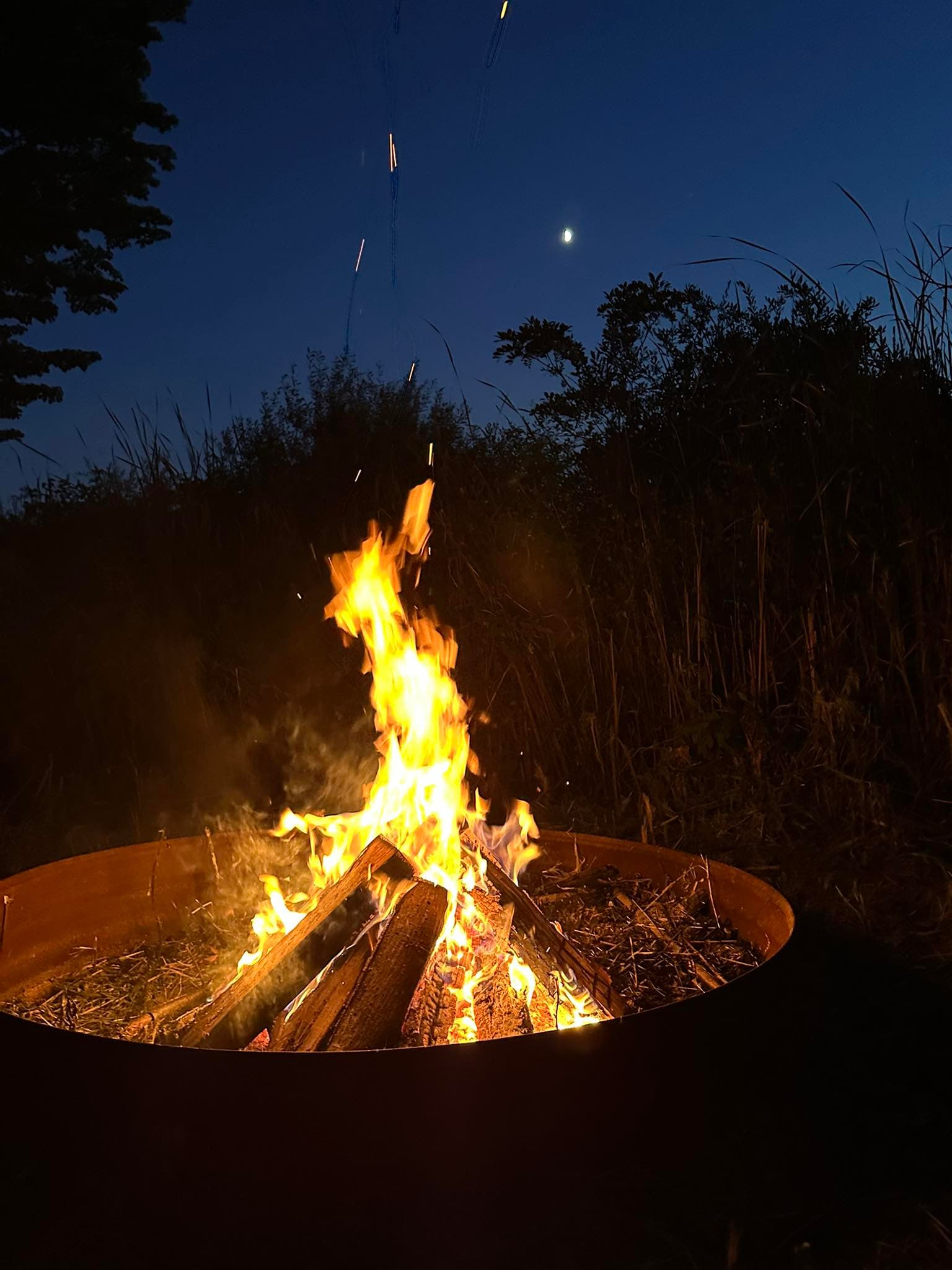
- The backyard fire pit. Everyone is smoking something. You do not want THC tonight. CBG flower lets you participate in the circle without explaining yourself or sitting it out.
- The after-work wind-down. You used to pour a glass of wine to signal that work was over. CBG gives you a different signal — a deliberate five-minute break with a tangible ritual that says "the day is done."
- The concert or festival. You want something in your hands. You want to feel part of it. You do not want to be impaired, hungover, or worried about a drug test on Monday.
- The tolerance break. You are taking time off THC but still want to smoke. CBG is non-psychoactive hemp — it satisfies the hand-to-mouth ritual while your tolerance resets. See our guide on CBG flower benefits.
- The quiet evening alone. Sometimes the ritual is just for you. Rolling, packing, sitting on the porch. The point is not the audience. The point is the pause.
What CBG feels like (honestly)
We are not going to tell you CBG flower feels like alcohol. It does not. Nothing non-intoxicating feels like alcohol, and anyone claiming otherwise is selling something.
What users consistently describe is a mild, clear-headed sense of ease. The tension in your shoulders drops a notch. Your internal monologue slows down slightly. You are not high. You are not buzzed. You are just a little more present. The scientific basis: CBG interacts with CB2 receptors and may modulate GABA reuptake, which could account for the reported calming effect. This is a structure/function observation — not a medical claim. Individual results vary.
Our two strains are designed for different use cases. Stem Cell ($12-$55) is the daily-use strain — clear focus, subtle background calm, designed for daytime or anytime. The White ($18-$80) is the evening strain — deeper relaxation, more body sensation, better for wind-down. Both are grown at Lifestyle Family Farms in Grass Lake, Michigan and come with third-party Certificates of Analysis.
The honest case for mixing approaches
Being sober curious does not mean picking one alternative and committing to it forever. Most people who successfully reduce or eliminate alcohol use a combination of strategies.
- NA beer at the barbecue where everyone is holding a can.
- Kava at the kava bar on Friday night when you want a social outing with a body sensation.
- CBG flower on the porch when you want the ritual of stepping away and unwinding.
- An adaptogenic drink at your desk when you want something that feels intentional but you are not ready to smoke.
The point is not brand loyalty to any single alternative. The point is having options so that alcohol is no longer the default. The sober curious movement works best when you build a toolkit — and CBG flower is one of the more useful tools in it, particularly for the ritual gap that beverages cannot fill.
Frequently asked questions
What are the best sober curious alternatives to alcohol?
The most popular options are non-alcoholic beer, wine, and spirits; kava; adaptogenic drinks; functional mushroom beverages; and CBG flower. The best choice depends on whether you are looking for flavor, a body sensation, or a physical ritual.
Can you get a buzz without alcohol?
Kava produces a real body relaxation. CBG flower provides subtle calm. Neither produces intoxication — they are milder, functional alternatives. If you define "buzz" as the feeling of being drunk, no legal non-alcoholic alternative replicates that.
Is CBG flower a good alcohol alternative?
CBG flower fills the ritual gap that beverages cannot. It is smokable, non-psychoactive, and federally legal. For people who miss the physical act of unwinding — not just the drink — it is one of the most effective options. See Does CBG get you high? for the full science.
What is the sober curious movement?
Coined by Ruby Warrington in 2018, sober curious is the practice of questioning your relationship with alcohol without necessarily committing to full sobriety. It emphasizes intentionality over abstinence.
Does CBG flower get you high?
No. CBG is non-psychoactive. It does not produce intoxication. See our dedicated guide: Does CBG get you high?
Ready to try the ritual alternative?
Farm-direct CBG flower. Non-psychoactive. Two strains for day and evening. Third-party lab tested.