How to Read a Certificate of Analysis (COA)
A Certificate of Analysis is the single most important document in hemp. It is the only independent proof that the flower you are buying contains what the label claims — and nothing it should not. If you have never read one, this guide will walk you through every section, what to look for, and what should make you walk away.
Last updated: April 2026
What a COA is and why it matters
A Certificate of Analysis — commonly called a COA — is a lab report produced by an independent, accredited testing facility. It documents the chemical composition and safety profile of a specific batch of hemp flower. The lab receives a sample, runs a series of analytical tests, and publishes the results in a standardized report.
The COA exists because the hemp industry does not have the same point-of-sale testing infrastructure as, say, food or pharmaceuticals. The 2018 Farm Bill legalized hemp federally but left quality assurance largely to the supply chain. Third-party lab testing is the mechanism that fills that gap.
For the consumer, the COA answers three questions: Does this product contain the cannabinoids the label claims? Is the THC level within legal limits? Has it been screened for contaminants that could harm you? Without a COA, you are taking the seller at their word. With one, you are reading data.
At Sober Sativas, every batch of CBG flower from Lifestyle Family Farms receives independent third-party testing. The COAs are publicly available on our Compliance page.
Anatomy of a COA
A complete COA contains several distinct sections. Not every lab formats them identically, but the information covered should be consistent. Here is what you will find on a properly issued report.
Lab name, accreditation, and contact information
The top of the COA identifies who performed the testing. You should see the laboratory's legal name, physical address, phone number or email, and — critically — an accreditation number. The relevant standard is ISO/IEC 17025, the international standard for the competence of testing and calibration laboratories. If the lab is ISO 17025 accredited, it means their methods, equipment, and quality management systems have been independently audited. This is the minimum bar for a lab whose results you should trust.
Sample information
This section identifies what was tested. It includes the product name, the batch or lot number, the date the sample was received, and the date the testing was completed. The batch number is important — it should match the batch number on the product you purchased. If a COA does not include batch-specific information, it may be a "generic" report applied across multiple harvests, which undermines the entire point of lab testing.
Cannabinoid profile (potency panel)
This is the section most people look at first. The potency panel lists the concentration of each cannabinoid found in the sample, typically reported as a percentage of dry weight. For CBG flower, the key values are:
- CBG (cannabigerol): The primary cannabinoid in CBG flower. Sober Sativas strains typically test between 11–14% CBG.
- CBD (cannabidiol): Usually present at low levels in CBG-dominant flower — often 1–3%.
- Delta-9 THC: Must be below 0.3% by dry weight under the 2018 Farm Bill. CBG flower is naturally ultra-low in THC.
- Total THC: Includes delta-9 THC plus THCa (which converts to THC when heated). Under P.L. 119-37, effective November 2026, total THC must be below 0.4mg per product unit — a threshold CBG flower clears comfortably.
- Total cannabinoids: The sum of all measured cannabinoids. Gives you a picture of overall potency.
Understanding ND and LOQ
Two abbreviations appear frequently on COAs:
- ND (Not Detected): The analyte was not found at or above the lab's detection threshold. This does not mean the substance is completely absent at the molecular level — it means the amount present, if any, is below what the instruments can reliably measure.
- LOQ (Limit of Quantitation): The lowest concentration at which the lab can accurately measure and report a number. Results below LOQ but above the Limit of Detection (LOD) may appear as "Detected" without a specific value. A COA should clearly state the LOQ for each analyte.
When you see "ND" next to delta-9 THC on a CBG flower COA, it means the THC level is so low the lab's instruments could not measure it — not just that it is below 0.3%.
Safety panels
The potency panel tells you what is in the flower. The safety panels tell you what should not be. A thorough COA includes all of the following:
- Pesticides: Tests for residual pesticides and plant growth regulators. A clean result means no detectable levels of the targeted compounds. Most labs test for 60–100+ pesticide analytes.
- Heavy metals: Screens for lead, arsenic, cadmium, and mercury — the four heavy metals most commonly regulated in consumable products. Hemp is a bioaccumulator, meaning it absorbs metals from soil. This panel is non-negotiable.
- Microbials: Tests for harmful bacteria (E. coli, salmonella) and total yeast and mold counts. Flower that was improperly dried or stored may harbor microbial contamination.
- Mycotoxins: Toxic compounds produced by certain molds (aflatoxins, ochratoxin A). These can form during cultivation or storage if humidity is not properly controlled.
- Residual solvents: More relevant for extracts and concentrates than raw flower, but some labs include this panel. Tests for chemicals like butane, ethanol, and propane that could remain from extraction processes.
How to read the cannabinoid profile
The cannabinoid profile is a table. Each row is a different cannabinoid. The columns typically include the analyte name, the result (as a percentage of dry weight or mg/g), and the LOQ. Here is how to interpret what you see for CBG flower specifically.
| Analyte | Typical CBG Flower Range | What to Look For |
|---|---|---|
| CBG (total) | 8–16% | Should match the label claim within ~1% |
| CBD (total) | 0.5–3% | Low levels normal in CBG-dominant cultivars |
| Delta-9 THC | ND – 0.15% | Must be <0.3% for federal compliance |
| Total THC | ND – 0.25% | Well within Farm Bill and P.L. 119-37 limits |
| Total cannabinoids | 10–18% | Sum of all cannabinoids — indicates overall potency |
A cannabinoid profile that shows high CBG with very low or ND THC is exactly what you want to see. If a product labeled as "CBG flower" has more CBD than CBG, or shows THC above 0.3%, the product is either mislabeled or non-compliant.
Red flags: when to walk away
Not every COA is trustworthy. Here are the warning signs that should make you question a product — or skip it entirely.
- No lab name or contact information: A COA without a named laboratory is not a COA. It is a piece of paper. You cannot verify the results if you do not know who produced them.
- No accreditation number: If the lab is not ISO 17025 accredited (or accredited under a state-equivalent program), there is no independent verification that their testing methods are sound.
- Sample date older than 12 months: Cannabinoid and terpene profiles degrade over time. A COA from 18 months ago does not tell you what is in the flower you are buying today. Best practice is batch-specific testing — one COA per harvest.
- Missing safety panels: A COA that only shows the potency panel (cannabinoid percentages) and skips pesticides, heavy metals, and microbials is incomplete. Potency-only testing costs less, which is why some companies stop there. It is not sufficient.
- THC above 0.3%: If the delta-9 THC result exceeds the federal 0.3% threshold, the product is not legal hemp. Do not purchase it from a hemp retailer.
- No batch or lot number: The COA should be traceable to a specific batch. If it cannot be matched to the product on your shelf, it is not serving its purpose.
- Results that do not match the label: If a product says 15% CBG but the COA shows 8%, that is a labeling accuracy problem. Small variance (1–2%) is normal due to flower heterogeneity. Large discrepancies are a trust issue.
What makes a COA trustworthy
The inverse of the red flags list. A trustworthy COA has these characteristics:
- ISO 17025 accreditation: The lab has been independently audited for method accuracy, equipment calibration, and quality management. This is the international gold standard for testing laboratories.
- Independence: The lab is a third party — it has no financial relationship with the company whose product it is testing. In-house testing is inherently less trustworthy.
- Batch-specific testing: The COA is tied to a specific lot or batch number that matches the product. Every harvest should be tested independently.
- Full panel coverage: Cannabinoid potency plus all five safety panels (pesticides, heavy metals, microbials, mycotoxins, residual solvents). Potency-only is a partial picture.
- Recent test date: Within the last 12 months at most. For flower sold seasonally from a single harvest, the test should correspond to that harvest.
How Sober Sativas handles COAs
Every batch of CBG flower we sell is tested by an independent third-party laboratory. The COA is publicly available on our Compliance page before the batch goes on sale.
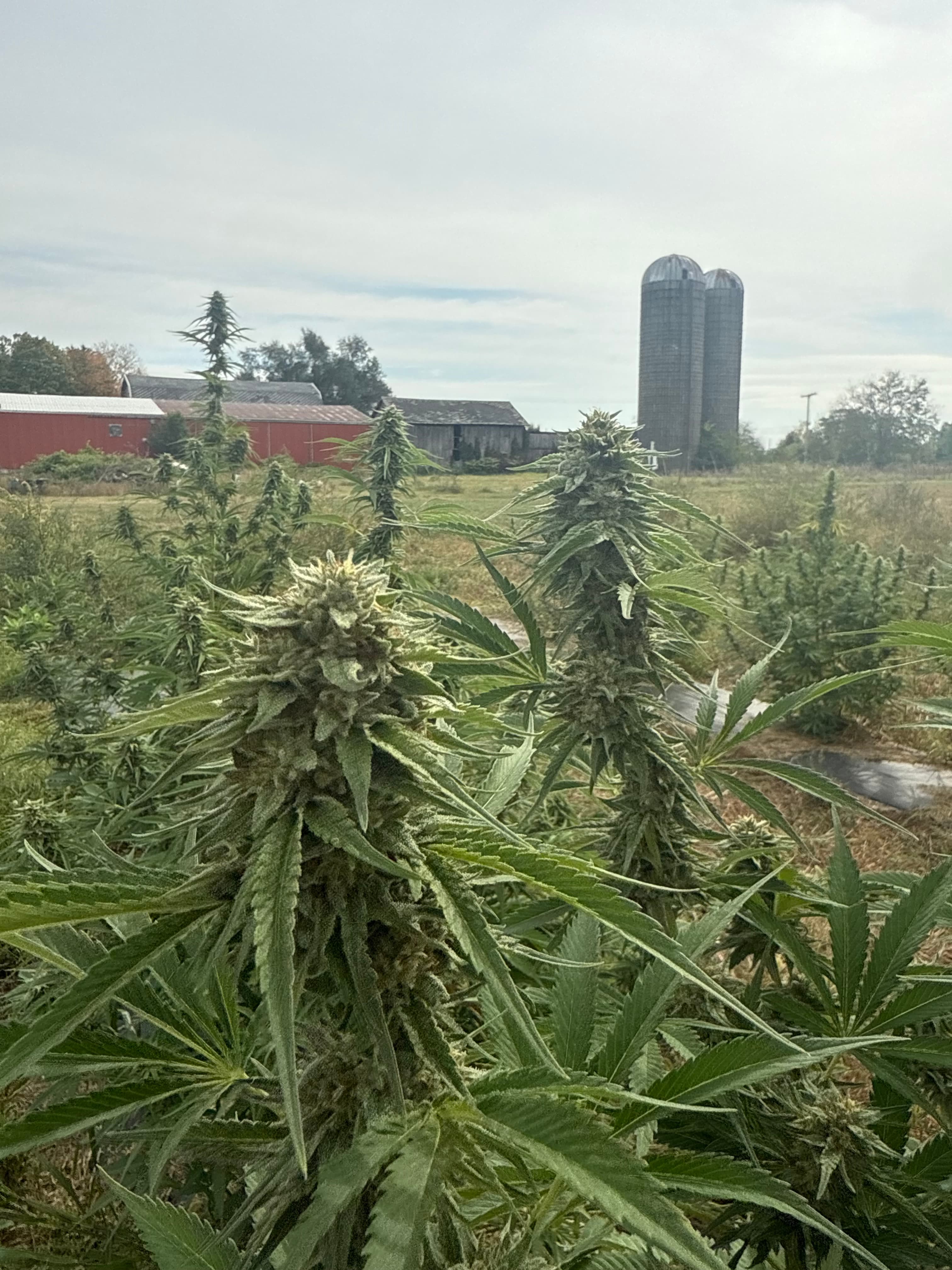
Our flower comes from a single source — Lifestyle Family Farms in Grass Lake, Michigan. The supply chain is two steps: farm to us, us to you. There is no intermediary, no broker, no white-label repackaging. Every batch has a documented chain of custody.
We believe COA transparency is a baseline, not a differentiator. If a company cannot produce a batch-specific COA for the product you are considering, that tells you something important about how they operate.
For a deeper look at hemp legality and the 2026 regulatory landscape, see our state-by-state legal guide. To understand what CBG actually is and how it differs from CBD, see What is CBG?
Frequently asked questions
What is a Certificate of Analysis (COA)?
A lab report from an independent, accredited facility that documents the cannabinoid content and safety profile of a specific batch of hemp flower. It confirms what is in the product and screens for contaminants.
What does ND mean on a COA?
Not Detected — the substance was not found at or above the lab's detection threshold. For THC on a CBG flower COA, ND means the level is too low for the instruments to measure.
What is the difference between LOD and LOQ?
LOD (Limit of Detection) is the lowest level a lab can detect a substance. LOQ (Limit of Quantitation) is the lowest level it can accurately measure. LOQ is always higher. Results between LOD and LOQ may show "Detected" without a precise number.
How do I know if a COA is trustworthy?
Look for ISO 17025 accreditation, an independent (third-party) lab, batch-specific testing with a matching lot number, a test date within 12 months, and full safety panels — not just cannabinoid potency.
How often should hemp flower be lab tested?
Every batch should have its own COA. A single COA should not cover multiple harvests. If a company shows the same report for months of product, they are not testing every batch.
See our lab results for yourself
Every batch of Sober Sativas CBG flower is independently tested. COAs, farm sourcing, and compliance documentation — all public.