
CBG vs CBD: What's the Difference?
Both are non-psychoactive hemp cannabinoids. Both are federally legal. But they are not the same thing — and for many people, that distinction matters.
Last updated: March 2026
The relationship between CBG and CBD
CBG (cannabigerol) and CBD (cannabidiol) are both cannabinoids found in hemp. They are both non-psychoactive — neither will get you high. They are both federally legal under the 2018 Farm Bill when derived from hemp with less than 0.3% delta-9 THC.
But they have a specific biological relationship: CBG comes first. Inside the hemp plant, CBGA (the acidic precursor to CBG) is synthesized first. As the plant matures, enzymes convert CBGA into THCA, CBDA, and CBCA — which then become THC, CBD, and CBC during decarboxylation. CBG is, in a very real sense, where CBD starts.
That precursor relationship is why you rarely see both in high concentrations in the same plant. A plant optimized for CBD has already converted most of its CBG. A plant optimized for CBG has been bred or harvested to retain it before conversion happens.
Side-by-side comparison
| Category | CBG | CBD |
|---|---|---|
| Full name | Cannabigerol | Cannabidiol |
| Psychoactive | No | No |
| Federally legal (hemp-derived) | Yes | Yes |
| Position in plant biosynthesis | Precursor (comes first) | Downstream (derived from CBG) |
| Natural abundance in hemp | Low (1–4% in standard cultivars) | High (10–20%+ in CBD hemp) |
| High-potency flower available | Yes (specialty cultivars) | Yes (widely available) |
| Reported character | Calm, clear-headed, alert | Relaxing, sometimes sedating |
| Aroma (flower form) | Herbal, earthy, mildly floral | Earthy, skunky (strain-dependent) |
| THC content (compliant flower) | <0.3% delta-9 | <0.3% delta-9 |
| 2026 regulatory compliance (P.L. 119-37) | Strong — naturally ultra-low total THC | Varies — full-spectrum CBD products may be affected |
| Typical price (flower, 3.5g) | $15–$30 (premium) | $8–$20 (more commoditized) |
Effects: the real-world difference
This is where the distinction matters most for consumers. CBD and CBG are both non-psychoactive, but they interact with the body's endocannabinoid system differently.
CBD is primarily associated with relaxation and is often described as calming. At higher doses, many users report a sedating quality. It has been extensively researched and has a well-established consumer profile.
CBG is less researched but has a distinct reported character. Users describe it as more alert and clear-headed than CBD — producing a sense of calm without the heavy or sedating quality. Many people who find CBD too relaxing for daytime use report that CBG fits better.
Neither is objectively better. The right choice depends on what you are looking for. For people who want something to smoke at any time of day without feeling slowed down, CBG tends to be the better fit. For people looking for help winding down at night, CBD may be preferable.
Note: These are user-reported experiences, not medical claims. Neither CBG nor CBD is FDA-approved to treat, cure, or prevent any condition. Individual experiences vary.
Why CBG is more expensive
CBG has historically been rarer and more expensive to produce than CBD, for a simple reason: the hemp plant converts CBG into other cannabinoids as it matures. In a standard hemp cultivar, CBG content at harvest is typically 1–4% — the rest has already converted to CBD or trace cannabinoids.
To produce flower with 10–15% CBG, farmers need either:
- Early harvest timing — pulling the plant before full CBG conversion, which requires precision and sacrifices some yield
- Specialized genetics — CBG-dominant cultivars bred to retain high CBG content through maturity
Modern hemp breeding has improved CBG genetics significantly. Lifestyle Family Farms uses cultivars developed for stable, high-CBG expression at full maturity — making consistent 11–14% CBG flower a repeatable result rather than a lucky early harvest.
The trichome difference
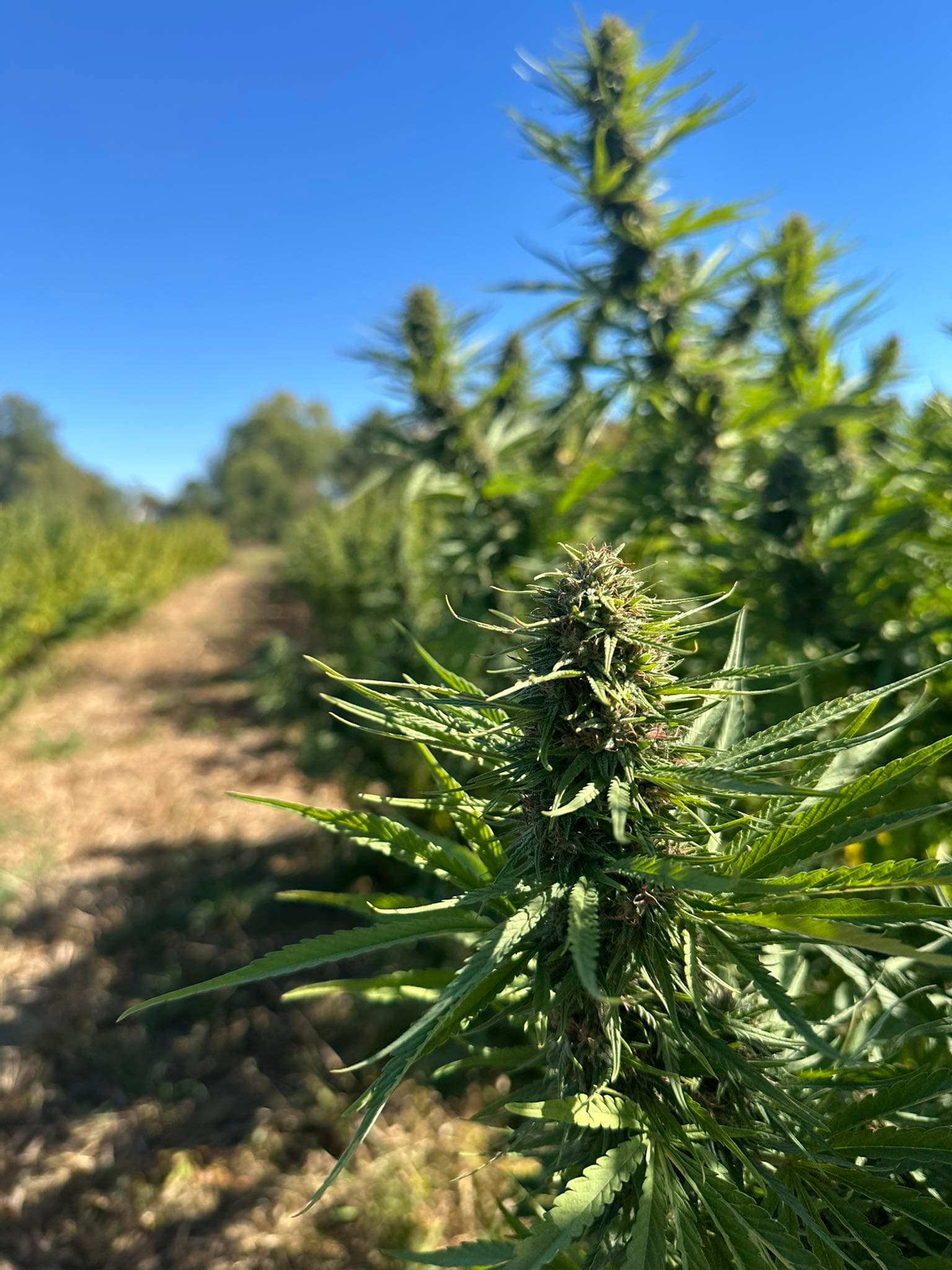
Visually, CBG flower and CBD flower look similar — both produce trichome-covered buds that vary in density by strain. One notable distinction: CBG flower tends to present with a lighter green or whitish-green color, which is part of why some CBG cultivars are named after their pale appearance (like our "The White" strain).
The lighter color reflects higher trichome density and lower chlorophyll saturation — a visual marker of quality in well-grown CBG flower. It is not a rule, but it is a useful signal.
Which is right for you?
Here is a simple framework:
- Choose CBG if you want a smokable hemp flower with a clear-headed, alert quality — especially if you are on a tolerance break, quitting cigarettes, or looking for a daytime option.
- Choose CBD flower if you want the most widely available, most researched option — or if you specifically prefer a more sedating, wind-down quality.
- Try both if you are exploring the cannabinoid spectrum and want a full picture. Many users blend CBG and CBD flower.
Frequently asked questions
Does CBG feel different from CBD?
Many users report CBG as more alert and clear-headed compared to CBD, which can feel more sedating. Both are non-psychoactive. Individual experiences vary.
Is CBG or CBD better?
Neither is objectively better. They serve different needs. CBG flower suits people who want a clear-headed smokable option; CBD suits people looking for a more relaxing effect or a wider product format selection.
Why is CBG more expensive than CBD?
Because high-CBG yield requires specialized genetics or precise early harvest timing — both more resource-intensive than growing standard CBD hemp.
Can I use CBG and CBD together?
Yes. They are often found together in full-spectrum hemp products. Many users combine them intentionally. No known adverse interactions between the two.
Try CBG flower for yourself
Two strains available: Stem Cell (13.8% CBG) and The White (11.4% CBG). Third-party tested. Farm-direct from Michigan.